The History of Heathenry and Fyrnsidu

Beofeld, the author of Wind in the Worldtree, has published A Brief History of Modern Heathenry.

Modern Heathenry has no single origin story. It has no single starting point. It is quite unlike the most major world religions of Christianity, Islam, and Buddhism because those religions began from revelations revealed to single individuals and from their individual work only to diversify later on. You can’t have Christianity without Jesus, it is as simple as that. But you also can’t have Christianity as it exists today without Saul (later turned Paul) of Tarsus. These individuals were the root of the entirety of all the now diverse branches of Christianity. You further can’t have Islam without Muhammad. While there are Sunnis and Shia and Sufis now, they all still branched out from Muhammad. Buddhism too, if you had no Siddhartha Gautama you would have no Buddhism. Heathenry, on the other hand, took a very different route both historically and modernly.

Byron Pendason, the author of Mine Wyrtruman, has posted A History of Fyrnsidu to act as a companion blog post to Beofeld’s.

Wes hāl! Last month, I celebrated five years in Fyrnsidu, and I thought a good way to commemorate that would be to write up a brief history of Fyrnsidu and it’s predecessors. On my home page, I define Fyrnsidu as “a modern religion based upon the religion of the pre-Christian Germanic tribes that settled in Britain in the fifth century of the common era.” Today, we usually define it as Anglo-Saxon Heathenry, but it was originally meant as an alternative to Theodism. More on them in a bit though, first I want to explore the influences leading up to it.

If you’re interested in the history of Heathenry and/or Fyrnsidu, check out these blog posts.

Woden: An Informal Study

sigrunaldgyth's avatarLays of Mad Sigrún

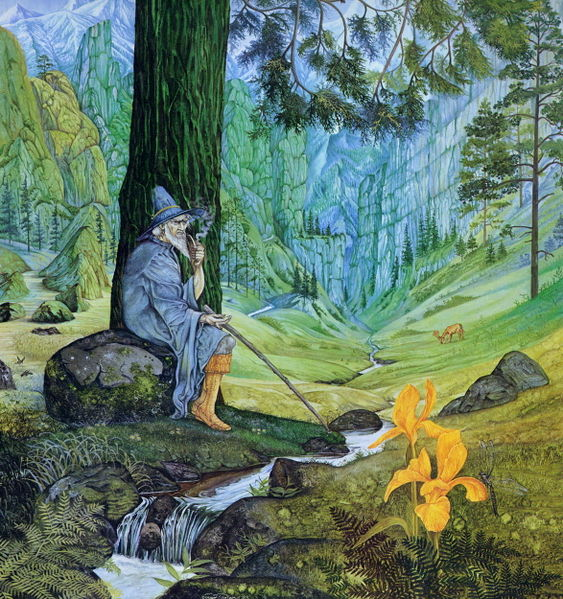
A picture of Gandalf smoking beats another use of the same damn Odin portrait everyone else uses.

So, it’s not exactly a secret that the top deity of my personal praxis is Woden; being a witch, a poet, and a horrible gremlin of a scholar, it’s probably the most natural pairing since salt and the sea. Many an offering I’ve made to him, poetry I’ve dedicated, and though I don’t personally put him at the very top of the pecking order in my own somewhat eclectic reconstruction of cosmology, his centrality is still key.

Now, there have been times where I’ve seen Woden discussed, largely in the context of the more well-known Odin, and I’ve noticed people acting confused when I, or anyone else, bring up that the two are actually somewhat distinct. And honestly, I don’t blame anyone; a lot of deities map very well between Germanic cultures (Thunor…

View original post 1,427 more words

Reflections on Mōdraniht

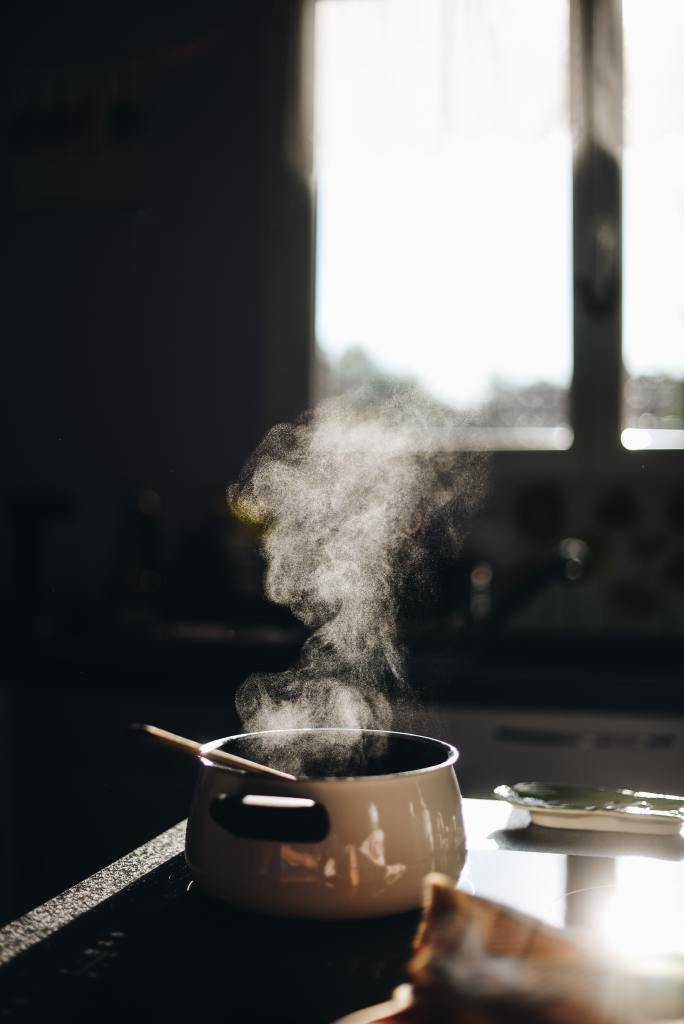
Ceremony has its place, and so does praying over a hot stove. Photo by Gaelle Marcel on Unsplash Mōdraniht is an Old English holiday that comes to us from Bede, who recounts [1] that it was celebrated by the pre-Christian heathens on the night before Christmas. The name means Mothers’ Night, though there are (naturally) […]

Reflections on Mōdraniht

‘Twas the Night Before Yule

‘Twas the night before Yule, and all through the houseNot a creature was stirring, not even a mouse;The children were tucked into bed with great care,They lay hoping that Woden soon would be there; Cookies and milk were left out for Father Yule,Because it is said that a gift for a gift is the rule.The […]

‘Twas the Night Before Yule

Swords & Plough-shares: reflections on the Wild Hunt

Deer, especially stags, are a key element of Wild Hunt imagery for me. Photo by Vincent M.A. Janssen from Pexels The Wild Hunt is one name for a folkloric/mythic motif that crops up in different guises across North & Western Europe: a phantom hunt that rides through the night sky, often seeking out evildoers and dangerous to behold. […]

Swords & Plough-shares: reflections on the Wild Hunt

Alliterative 101: The Basics

Hwæt! Wē Gārdena in ġēardagum þēodcyninga þrym ġefrūnon, hū ðā æþelingas ellen fremedon. Oft Sċyld Sċēfing sċeaþena þrēatum, monegum mǣġþum meodo-setla oftēah. Eġsode eorl, syððan ǣrest wearð fēasċeaft funden; hē þæs frōfre ġebād, wēox under wolcnum, weorð-myndum þāh, oð þæt him ǣġhwylċ þāra ymb-sittendra ofer hronrāde hȳran sċolde, gomban ġyldan; þæt wæs gōd cyning! These […]

Alliterative 101: The Basics